A Professional Analysis: How ALPINION's Flagship Ultrasound Systems Compare to Industry Competitors

Introduction: The Evolving Ultrasound Landscape
In the highly competitive medical imaging market, ultrasound technology continues to advance at a rapid pace. While established giants like GE Healthcare, Philips, and Siemens Healthineers have long dominated the landscape, manufacturers such as ALPINION Medical Systems have emerged as formidable contenders, challenging the status quo with innovative technology and a strong value proposition. This article provides a professional, in-depth comparison of ALPINION's flagship ultrasound platforms, particularly the E-CUBE and X-CUBE series, against comparable systems from leading industry competitors. Our analysis will focus on four critical domains: core imaging architecture, advanced clinical applications, user workflow and ergonomics, and the total cost of ownership.
Section 1: Core Imaging Architecture and Image Quality
The fundamental determinant of any ultrasound system's diagnostic utility is its image quality. This is a direct result of its underlying architecture, from the transducer technology to the beamforming and post-processing algorithms. ALPINION has invested heavily in developing a proprietary, end-to-end imaging chain.
ALPINION's Architectural Philosophy: Crystal Signature™ and FleXcan™
At the heart of ALPINION's premium systems lies its Crystal Signature™ technology, which centers on the use of single crystal transducers. Unlike conventional piezoelectric materials, single crystal technology provides higher energy conversion efficiency, wider bandwidth, and greater sensitivity. This translates directly into improved penetration for difficult-to-image patients and enhanced resolution for detailed anatomical assessment.
This advanced transducer technology is paired with ALPINION's FleXcan™ Architecture, a software-driven imaging platform. This architecture allows for flexible and efficient processing of large amounts of acoustic data, enabling sophisticated imaging modes and rapid image optimization. The combination ensures that the high-quality signals captured by the single crystal transducers are processed with precision, resulting in exceptional image clarity and uniformity.
Comparative Analysis with Competitors
Leading competitors have also developed their own unique architectural solutions. For instance, GE's cSound™ architecture on their LOGIQ E10 series utilizes a powerful software beamformer to reconstruct images in real-time, offering impressive computational power. Similarly, Philips' nSIGHT Imaging on their EPIQ and Affiniti platforms is an end-to-end architecture that processes a massive volume of acoustic data to achieve high frame rates and superb resolution without compromise.
When compared, ALPINION holds its own, particularly in applications where single crystal transducers excel, such as cardiology and abdominal imaging. While competitors' high-end systems may offer more raw computational power for niche research applications, ALPINION's focus on a pristine signal path from transducer to display provides outstanding fundamental 2D imaging and Doppler performance that meets or exceeds the requirements for the vast majority of clinical scenarios. The key differentiator often comes down to the specific transducer and clinical application being evaluated.
Section 2: Advanced Applications and Clinical Versatility
Modern ultrasound is no longer confined to basic B-mode and Doppler imaging. Advanced applications provide quantitative data and enhanced visualization, significantly expanding diagnostic capabilities. ALPINION has integrated a comprehensive suite of these tools into its flagship platforms.
Elastography
Shearwave elastography (SWE) has become a critical tool for non-invasively assessing tissue stiffness, particularly in liver, breast, and thyroid diagnostics. ALPINION offers a robust SWE implementation that provides quantitative stiffness measurements (in kPa or m/s) and a reliability index. This allows clinicians to assess fibrosis and characterize lesions with greater confidence.
Competitors also offer mature elastography solutions, such as GE's 2D-SWE and Siemens' Virtual Touch™ quantification (VTq). The primary differences often lie in the workflow, the size of the region of interest (ROI), and the specific quantitative outputs. ALPINION's solution is noted for its intuitive workflow and reliable performance, making it a clinically valuable tool that is competitive with the best in the industry.
Contrast-Enhanced Ultrasound (CEUS)
CEUS is another area where ALPINION demonstrates its commitment to advanced imaging. Their systems support low-MI contrast imaging, enabling the visualization of microvascular perfusion in real-time. This is invaluable for lesion characterization in the liver and kidneys, as well as for various vascular and cardiac applications.
The performance of ALPINION's CEUS capabilities is comparable to the established platforms from Philips and Siemens, which have long been leaders in this space. ALPINION provides the necessary tools for bubble detection, flash/replenishment techniques, and time-intensity curve (TIC) analysis, making it a fully-featured solution for departments performing contrast studies.
Specialized Probes and Features
ALPINION's strength in musculoskeletal (MSK) and small parts imaging is bolstered by its portfolio of high-frequency linear transducers, including the world's first 24MHz linear probe. These probes deliver exceptional spatial resolution for superficial structures. This is further enhanced by features like Needle Vision™, an image-processing technology that dramatically improves needle visualization for interventional procedures.
While all major manufacturers offer high-frequency probes and needle enhancement software, ALPINION's combination of extreme high-frequency transducers and effective visualization software makes it a particularly strong choice for anesthesiology, rheumatology, and pain management practices.
Section 3: Workflow, Ergonomics, and User Interface
In a busy clinical environment, efficiency is paramount. A system's usability, from its physical design to its software interface, directly impacts departmental throughput and sonographer well-being. ALPINION has prioritized a user-centric design in its X-CUBE series.
Intuitive Operation and Customization
The X-CUBE 90, for example, features a large, high-resolution touch screen that simplifies navigation and reduces reliance on physical knobs. The user interface is clean and can be customized to suit individual sonographer preferences. Features like Power Preset allow users to load optimized imaging parameters for a specific exam type with a single touch, significantly reducing setup time.
Comparatively, systems like the Philips EPIQ are known for their tablet-like user interface, which is highly intuitive for new users. GE's LOGIQ systems often feature a more traditional, button-heavy console but with extensive customization and programmable keys for power users. ALPINION strikes a balance, offering a modern touch-based interface while retaining key physical controls for functions that require tactile feedback, such as gain and TGC adjustments.
Ergonomic Design
Sonographer comfort and the prevention of work-related musculoskeletal injuries are major considerations in console design. ALPINION systems incorporate features designed to address this:
- A highly adjustable control panel and monitor for a customized fit.
- Lightweight transducers and flexible cables to reduce strain.
- A compact and mobile system footprint for easy transport between rooms.
These ergonomic features are standard across premium systems from all major brands. The subjective preference for one system's ergonomics over another often comes down to individual body mechanics and scanning style. However, ALPINION's designs are consistently well-regarded and demonstrate a clear understanding of sonographer needs.
Section 4: Value Proposition and Total Cost of Ownership (TCO)
Perhaps the most compelling aspect of ALPINION's market strategy is its value proposition. The company has successfully positioned itself as a provider of premium-tier technology without the premium-tier price tag often associated with the three largest manufacturers.
Acquisition Cost vs. Feature Set
An ALPINION X-CUBE system equipped with single crystal transducers, shearwave elastography, and CEUS can often be acquired at a significantly lower capital cost than a similarly configured system from a top-tier competitor. This makes advanced imaging technology accessible to a wider range of institutions, including private practices, outpatient imaging centers, and community hospitals with budget constraints. ALPINION does not force customers to choose between features and affordability; it delivers both.
Service and Reliability
Total cost of ownership extends beyond the initial purchase price to include service contracts, repairs, and software upgrades. ALPINION has built a reputation for system reliability and offers competitive service agreements. Their software-based architecture also allows for easier and more cost-effective upgrades, ensuring that the system remains clinically relevant for longer. While the service networks of GE, Philips, and Siemens are more extensive globally, ALPINION's focused support and lower-cost structure present a strong financial argument over the life of the system.
Conclusion
ALPINION has successfully transitioned from being a market entrant to a respected innovator in the global ultrasound industry. Its flagship systems, like the X-CUBE 90, demonstrate that exceptional image quality, a full suite of advanced applications, and user-centric design are not exclusive to the most expensive platforms on the market. While leading competitors continue to push the boundaries of ultrasound with their own formidable technologies, ALPINION offers a highly competitive and compelling alternative. For any clinical department seeking to maximize its diagnostic capabilities while maintaining fiscal responsibility, ALPINION's platforms warrant serious consideration and a head-to-head evaluation.
Related Articles
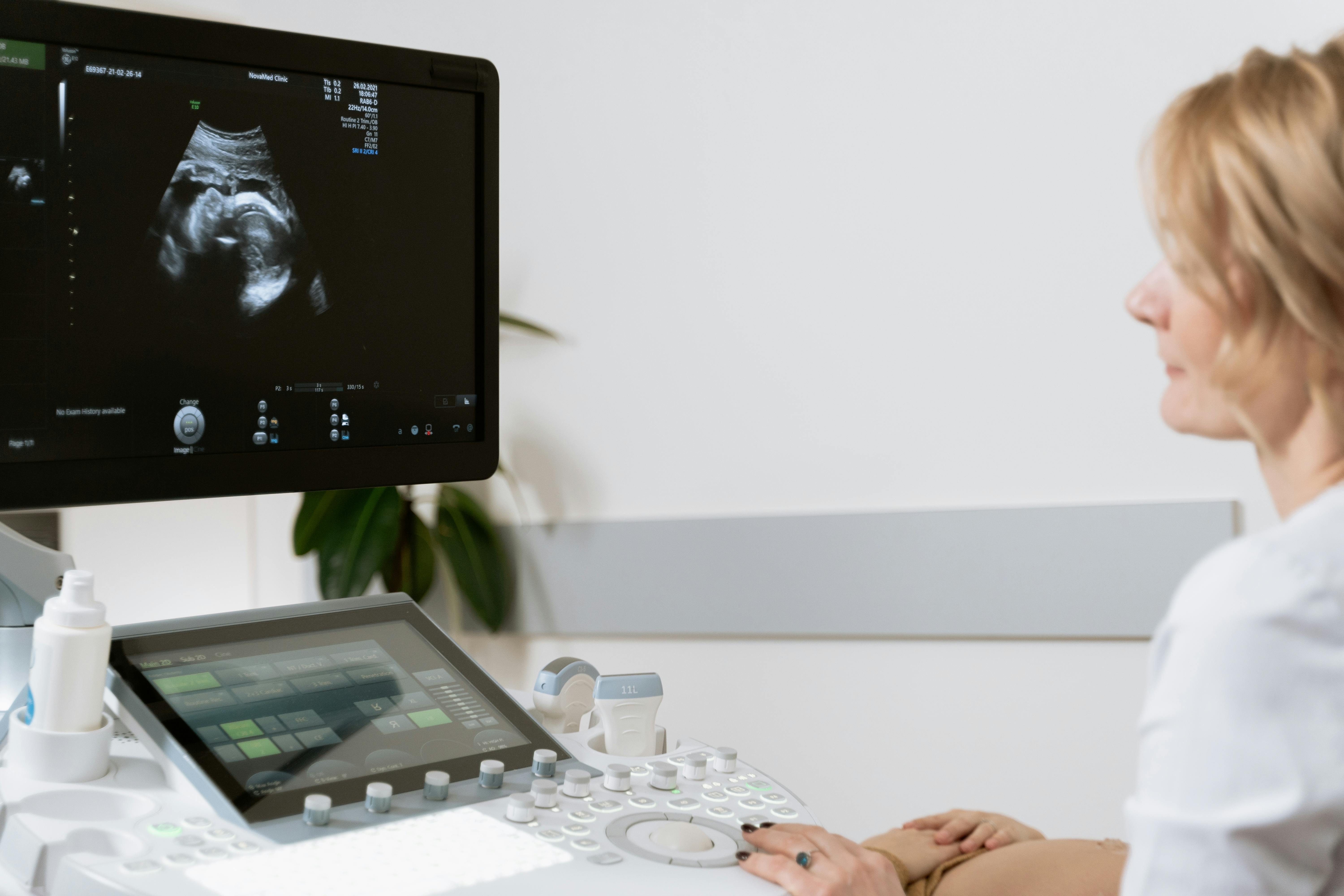
GE HealthCare Ultrasound Comparison: Voluson vs. Logiq Series
A comprehensive analysis for medical professionals comparing GE's premier ultrasound lines: the OB/GYN-focused Voluson and the general imaging powerhouse Logiq.
การวิเคราะห์เชิงลึกสำหรับคลินิก: เปรียบเทียบระบบอัลตราซาวนด์ดอปเพลอร์สีแบบพกพาหลังปี 2020
การเปรียบเทียบเชิงเทคนิคเชิงลึกของระบบอัลตราซาวนด์แบบพกพารุ่นล่าสุดจาก GE, Philips, Siemens, Samsung, Canon และ Mindray พร้อมคำแนะนำตามสถานการณ์ใช้งานจริงสำหรับแพทย์ที่ต้องการเลือกอุปกรณ์ POCUS รุ่นใหม่