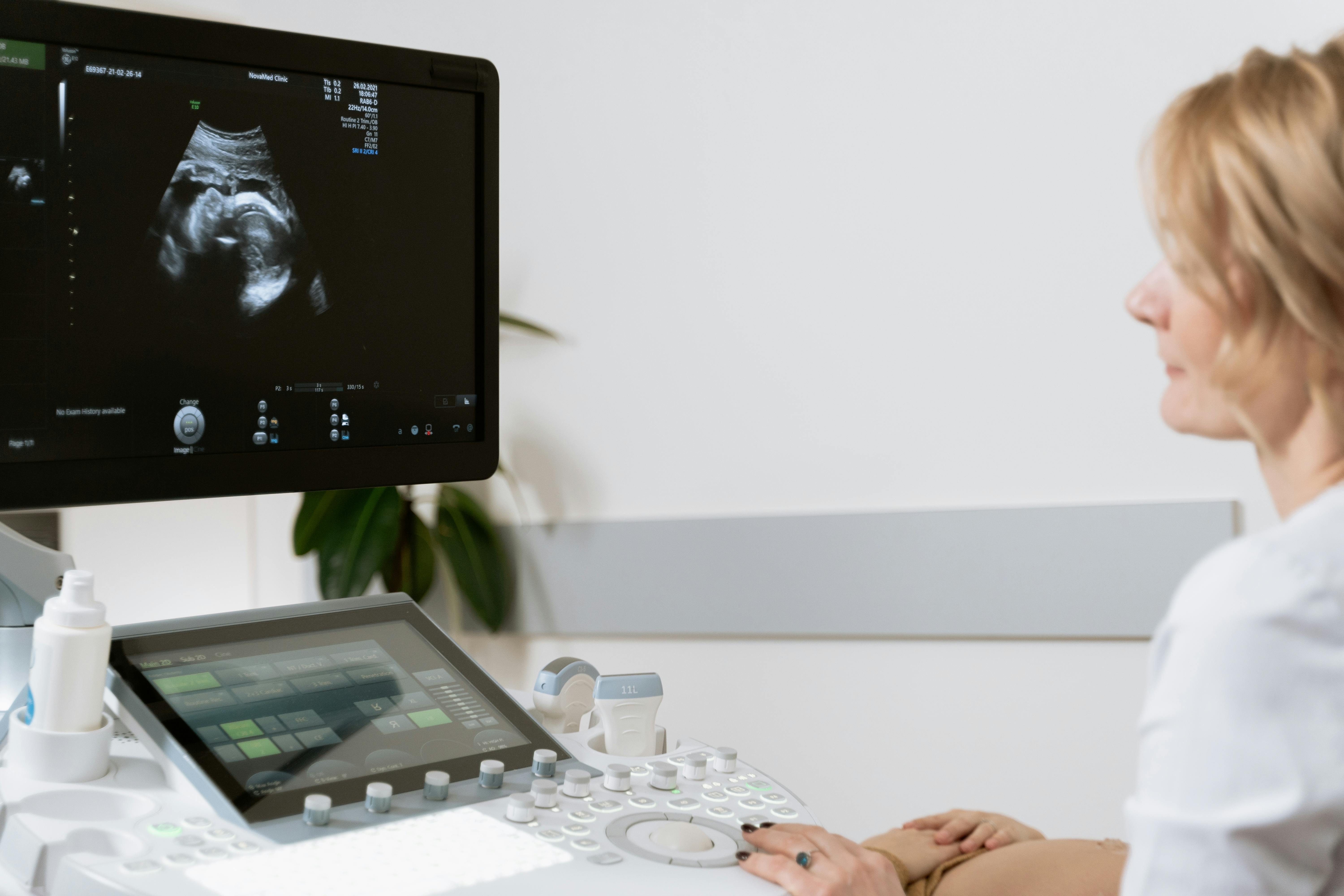
A Clinician's Deep Dive: Comparing Post-2020 Portable Color Doppler Ultrasound Systems
Introduction: The POCUS Revolution Matures
The world of medical imaging has been irrevocably transformed by the rise of Point-of-Care Ultrasound (POCUS). While portable ultrasound is not a new concept, the period after 2020 marks a significant inflection point. We have moved beyond simply shrinking cart-based systems into laptops; we are now in an era of true handheld power, sophisticated software, and AI-driven diagnostics that fit in a lab coat pocket.
This technological leap has democratized ultrasound, bringing it directly to the patient's bedside, the ambulance, and remote clinics. For the practicing clinician, however, this explosion of options can be overwhelming. The marketing claims are bold, but the practical, real-world performance is what truly matters.
This article provides a technical, practice-oriented comparison of the leading portable color Doppler ultrasound systems that have defined the post-2020 landscape. We will dissect the hardware, evaluate the software, and analyze the clinical workflow to help you determine which system is the right fit for your specific needs.
The New Era of Portability: What Changed After 2020?
The latest generation of portable ultrasounds represents a paradigm shift, driven by advancements in several key areas. Understanding these changes is crucial to appreciating the capabilities of modern devices.
Miniaturization Meets Performance
Historically, portability came with a significant compromise in image quality. The complex piezoelectric crystals and powerful processing required for high-fidelity imaging were difficult to miniaturize. Post-2020 systems, however, leverage advanced beamforming algorithms and processing power that rivals their larger counterparts. This is achieved through highly integrated application-specific integrated circuits (ASICs) and the offloading of processing to powerful, connected devices like tablets and smartphones.
The Rise of AI and Intelligent Workflow
Artificial intelligence is no longer a futuristic buzzword; it's a practical tool integrated into daily workflow. Modern systems use AI for tasks such as:
- Automated Measurements: Systems can automatically calculate ejection fraction, bladder volume, or fetal biometry, reducing manual input and inter-operator variability.
- Image Optimization: AI algorithms can instantly optimize gain, TGC (Time Gain Compensation), and other parameters to produce the best possible image with a single button press.
- Procedural Guidance: Some systems offer AI-powered guidance for nerve blocks or vascular access, superimposing needle paths and highlighting target anatomy.
Unprecedented Connectivity and Collaboration
The modern POCUS device is a connected hub. Wireless probes eliminate cumbersome cables, improving ergonomics and infection control. Seamless integration with hospital PACS (Picture Archiving and Communication System) and EMR (Electronic Medical Record) systems via Wi-Fi is now a standard expectation. Furthermore, cloud-based platforms and real-time tele-ultrasound capabilities allow for remote collaboration, expert consultation, and streamlined education, breaking down geographical barriers to care.
In-Depth Analysis: Comparing the Leading Brands
To provide a practical comparison, we will focus on three dominant players that represent different philosophies in the portable ultrasound market: GE Healthcare, Philips, and Butterfly Network.
GE Healthcare: Vscan Air & Venue Family
GE has long been a powerhouse in ultrasound, and its portable offerings blend legacy imaging excellence with modern innovation. They offer a spectrum from the ultra-portable Vscan Air to the more robust Venue tablet systems.
Image Quality: The Vscan Air CL is a standout, featuring a dual-headed probe with both a curved and a linear array transducer in a single device. This ingenious design allows for rapid switching between deep abdominal and superficial vascular exams without changing probes. The imaging is crisp for a device of its size, benefiting from GE's SignalMax technology. The larger Venue and Venue Go systems bring GE's high-end cSound beamforming architecture to a portable form factor, delivering exceptional image quality, particularly in penetration and contrast resolution, making them suitable for technically difficult patients.
Usability & Workflow: The Vscan Air pairs with an intuitive app on an iOS or Android device, offering a fast boot-up time and simple user interface perfect for quick-look exams. The Venue systems are designed for high-stakes environments like the ER and ICU. They feature a rugged, cleanable touchscreen tablet, a short boot-up time, and a suite of AI tools like Auto B-line, Auto IVC, and Auto VTI that expedite critical measurements.
Best For: The Vscan Air is ideal for primary care, emergency medicine, and hospitalists needing a versatile, quick-assessment tool. The Venue family is tailored for critical care, anesthesiology, and emergency departments that require premium imaging and advanced workflow tools in a durable, mobile package.
Philips: Lumify & Compact 5000 Series
Philips brings its premium imaging heritage to the portable space, focusing on a flexible, app-based ecosystem with its Lumify probes and a powerful laptop-based system with the Compact 5000.
Image Quality: Philips Lumify is renowned for its excellent image quality, which punches well above its weight class. Leveraging Philips' expertise in transducer technology, the probes deliver clear, detailed images with sensitive color Doppler. The Compact 5000 series elevates this further, incorporating technologies from their flagship EPIQ systems, including advanced quantification tools and exceptional performance on the S5-1 phased array transducer for cardiac imaging.
Usability & Workflow: Lumify's strength lies in its app-based platform and flexible subscription model. This allows for a lower initial investment and ensures the software is always up-to-date. A key differentiator is the integration of Philips Reacts, a tele-ultrasound platform that allows for live, two-way audio-visual collaboration. An expert can remotely guide a novice user, view the live ultrasound stream, and even control the image settings, which is invaluable for training and remote consultations. The Compact 5000 offers a more traditional but powerful workflow on a premium laptop platform.
Best For: Lumify is an excellent choice for private practices, mobile clinics, and hospital departments that value workflow flexibility, collaboration, and a subscription-based financial model. The Compact 5000 is a strong contender for private cardiology or vascular clinics needing a portable system without compromising on advanced diagnostic features.
Butterfly Network: The Butterfly iQ+
Butterfly Network is the disruptor in the market, having pioneered a fundamentally different approach to transducer technology.
Image Quality: The Butterfly iQ+ uses a single probe with a proprietary "Ultrasound-on-Chip™" technology. Instead of piezoelectric crystals, it uses a 2D array of capacitive micromachined ultrasound transducers (CMUTs). This allows a single probe to emulate linear, curved, and phased array transducers through software presets. The result is unprecedented versatility. While the image quality may not match the premium dedicated probes from GE or Philips in certain niche applications (e.g., high-frequency MSK), it is more than sufficient for a vast range of POCUS applications and has improved significantly with each generation.
Usability & Workflow: The workflow is the star of the show. The iQ+ is incredibly small and light, connecting via a cable to an iOS or Android device. The app is polished and user-friendly, featuring a suite of helpful AI tools like Auto Bladder Volume and various educational resources. All scans can be seamlessly uploaded to the secure Butterfly Cloud, which facilitates easy review, sharing, and EMR integration. The single-probe solution eliminates the time and cost associated with managing and switching between multiple transducers.
Best For: The Butterfly iQ+ is the quintessential POCUS tool. It is nearly perfect for emergency physicians, intensivists, global health initiatives, medical education, and any clinician who needs to perform whole-body imaging quickly and efficiently. Its affordability and versatility make it a powerful tool for democratizing ultrasound access.
Choosing Your System: A Practical Decision Framework
With such capable options, the choice depends less on finding a "good" system and more on finding the "right" system for your specific clinical context.
Image Quality vs. Ultimate Portability
There is a spectrum of performance. On one end, you have the Butterfly iQ+, offering unparalleled portability and versatility with diagnostic-quality imaging suitable for most POCUS questions. On the other end, systems like the GE Venue deliver imaging that approaches cart-based performance, crucial for subtle pathology or technically difficult studies. The Philips Lumify and GE Vscan Air sit comfortably in the middle, offering a superb balance of high-quality imaging and excellent portability.
Ask yourself: Are you making rapid, binary decisions at the bedside (e.g., fluid or no fluid?), or are you performing detailed diagnostic studies? Your answer will guide you along this spectrum.
Workflow, Ecosystem, and Total Cost of Ownership
Consider how the device will fit into your daily routine. Do you prefer a dedicated, ruggedized tablet (Venue) or the flexibility of a bring-your-own-device model (Lumify, Butterfly, Vscan Air)? How will you manage your data? Cloud-first systems like Butterfly offer incredible ease of use, while systems with robust DICOM capabilities are essential for deep hospital integration.
The financial model is also a critical factor. The subscription models of Philips Lumify and Butterfly Network lower the barrier to entry and bundle software updates and support. In contrast, the traditional capital purchase model of GE's systems may offer a lower total cost of ownership over many years, depending on the use case.
Clinical Application and Probe Selection
Finally, match the tool to the job. While the Butterfly's single probe is a jack-of-all-trades, some specialties require a master of one.
- Emergency & Critical Care: Butterfly iQ+ and GE Vscan Air excel due to their speed, versatility, and durability.
- Anesthesiology & Pain Management: A high-frequency linear probe is paramount. The GE Vscan Air's dual probe, Philips Lumify L12-4, or a dedicated linear on a GE Venue are all strong choices.
- Cardiology: For detailed echocardiography, a dedicated phased array probe is non-negotiable. The Philips Compact 5000 or GE Venue with their advanced cardiac packages are superior for this role.
- OB/GYN & Primary Care: All systems offer capable curved array transducers for abdominal and OB/GYN exams, making the choice dependent on workflow and cost preferences.
Conclusion: The Future is Portable and Intelligent
The post-2020 era of portable ultrasound is defined by choice and specialization. There is no longer a single "best" system, but rather a "best fit" for every clinician, department, and budget. GE Healthcare offers a robust, scalable ecosystem from the pocket to the premium tablet. Philips provides exceptional imaging quality with a flexible, collaborative, app-based model. Butterfly Network has redefined versatility with its revolutionary single-probe, cloud-native solution.
As technology continues to advance, the line between portable and cart-based systems will blur further. The defining features will not just be hardware specifications, but the intelligence of the software, the seamlessness of the workflow, and the power of the connected ecosystem. For practitioners, this is an exciting time, as these powerful tools empower us to provide better, faster, and more accurate care, right at the point where it matters most.